Live day one, tailored together: what actually ships first
No giant transformation project. Your pod goes live fast with pre-built workflows running day one. Your first session tailors the rest together — with human review, training, and a rollback plan before anything reaches a client.
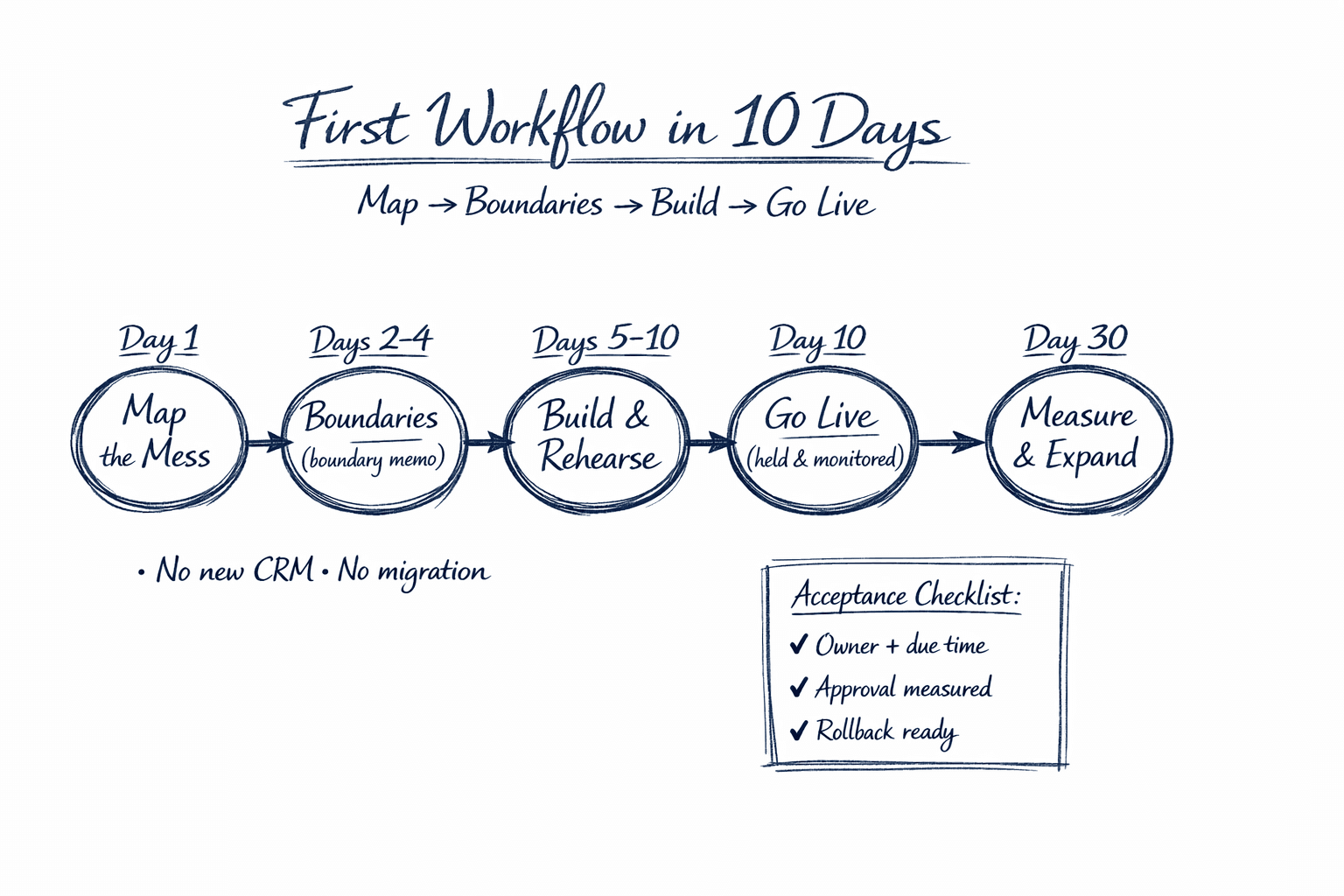
Implementation usually fails in one of two ways: it tries to do everything and ships nothing, or it ships quietly and no one trusts it. The live-fast pod does neither. Pre-built workflows run from day one, and one workflow at a time is tailored, held, and proven — with the boundaries written down, the approval path rehearsed, and a rollback plan before go-live.
Day one: the pod, live with pre-built workflows
- Inquiry response, follow-up, and review routing running around your actual tools: no new CRM, no new inbox.
- Drafts seeded from your prior approved sends so the first week sounds like you, not like software.
First session: tailor it together
- One session tailors the rest to your voice, your tools, and your approval boundaries — recorded in a one-page boundary memo.
- Training is part of the session: how approval works from your phone, what an exception looks like, and how to pause a workflow if needed.
- Go-live stays held and monitored: every sensitive send is still approval-required until the cadence is proven.
Then: one workflow proven before the next
The first workflow runs long enough to measure — response time, follow-up completion, exception rate, time spent on approval. Only then does the next workflow get scoped. The monthly cadence — outcomes, exceptions, next moves — starts here and continues as long as the service does.