Insights
Operating notes on the follow-through.
We run this business on the same operating system we install. These are the notes from that work — lead response, listing coordination, nurture, pipeline, and the post-ship cadence for builders — written for operators, not for feeds.
Start here
- Real estate first — the gap between arrival and close.
- Operations — cadence, approval, and the controlled launch.
- Builders & startups — after you ship, what actually runs.
Every article ends with a checklist you can run before you talk to us.
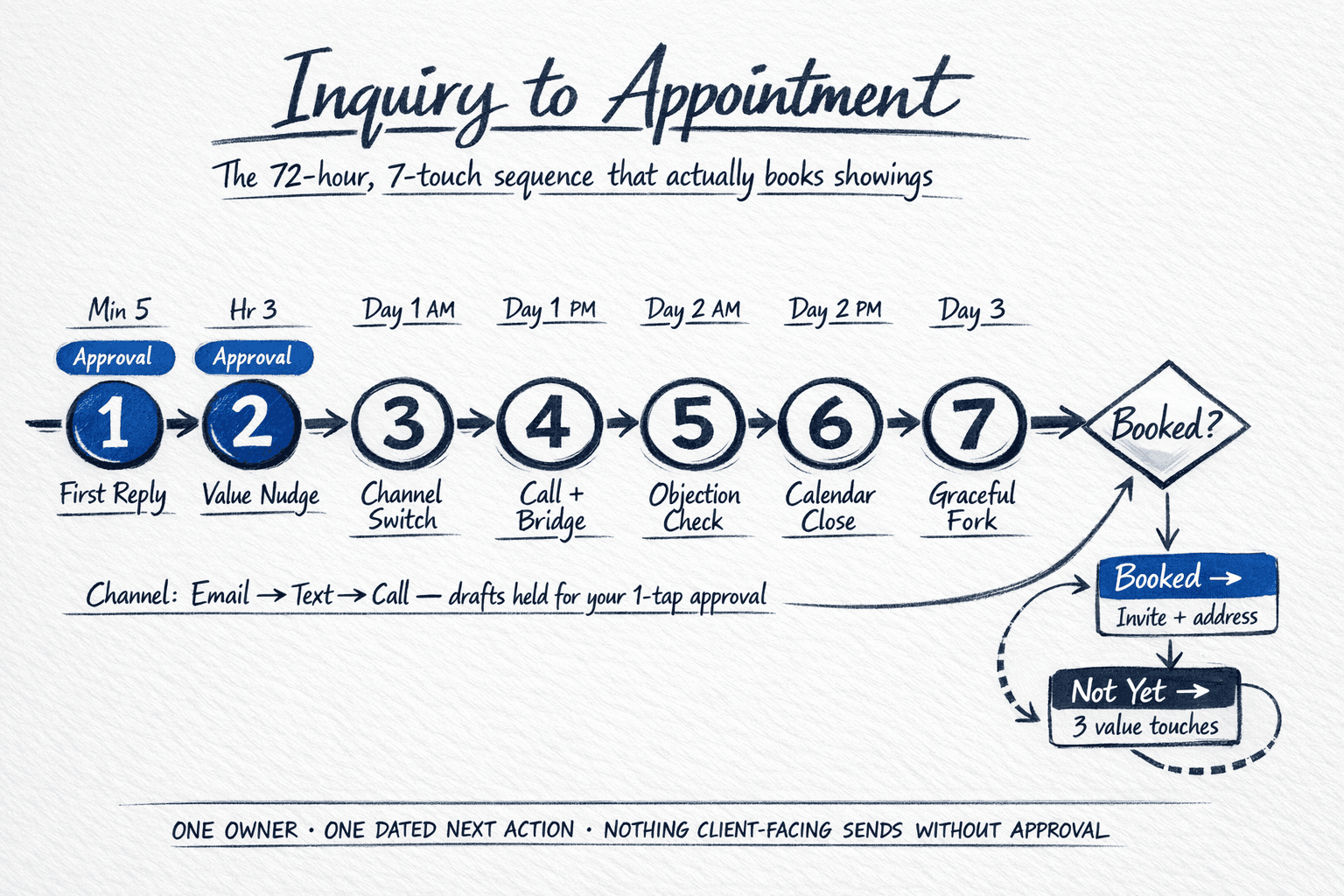
Inquiry to appointment: the 7-touch sequence that actually books showings
A fast first reply wins the conversation. A disciplined 72-hour sequence books the appointment. Here is the exact cadence — who drafts, who approves, and what happens when they say not yet — so inquiries stop dying after day one.
Read →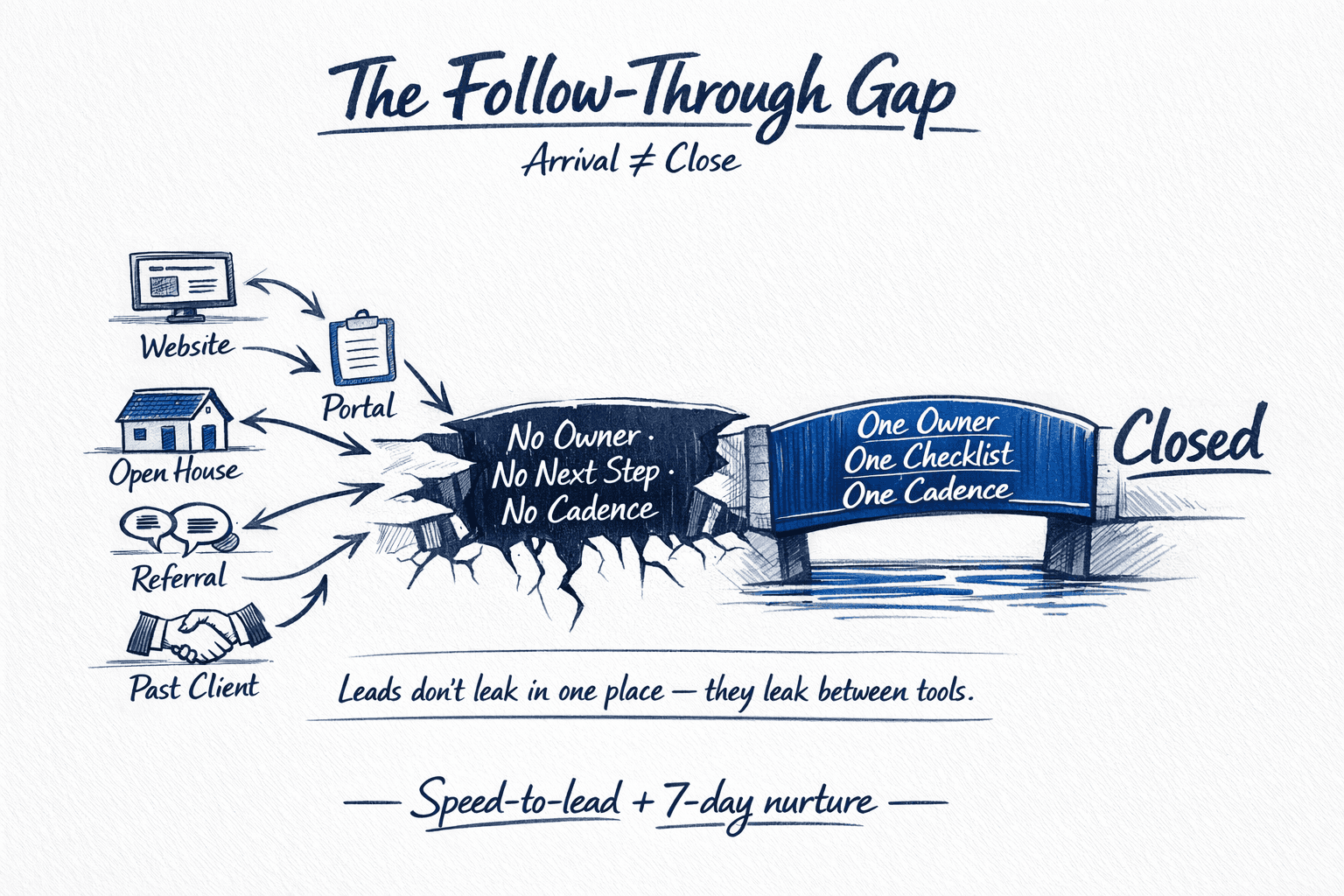
The lead follow-through gap is the real conversion problem
Most teams do not have a lead-generation problem. They have a follow-through problem — leads arrive from five places, response depends on whoever is free, and nurture stops when the owner gets busy.
Read →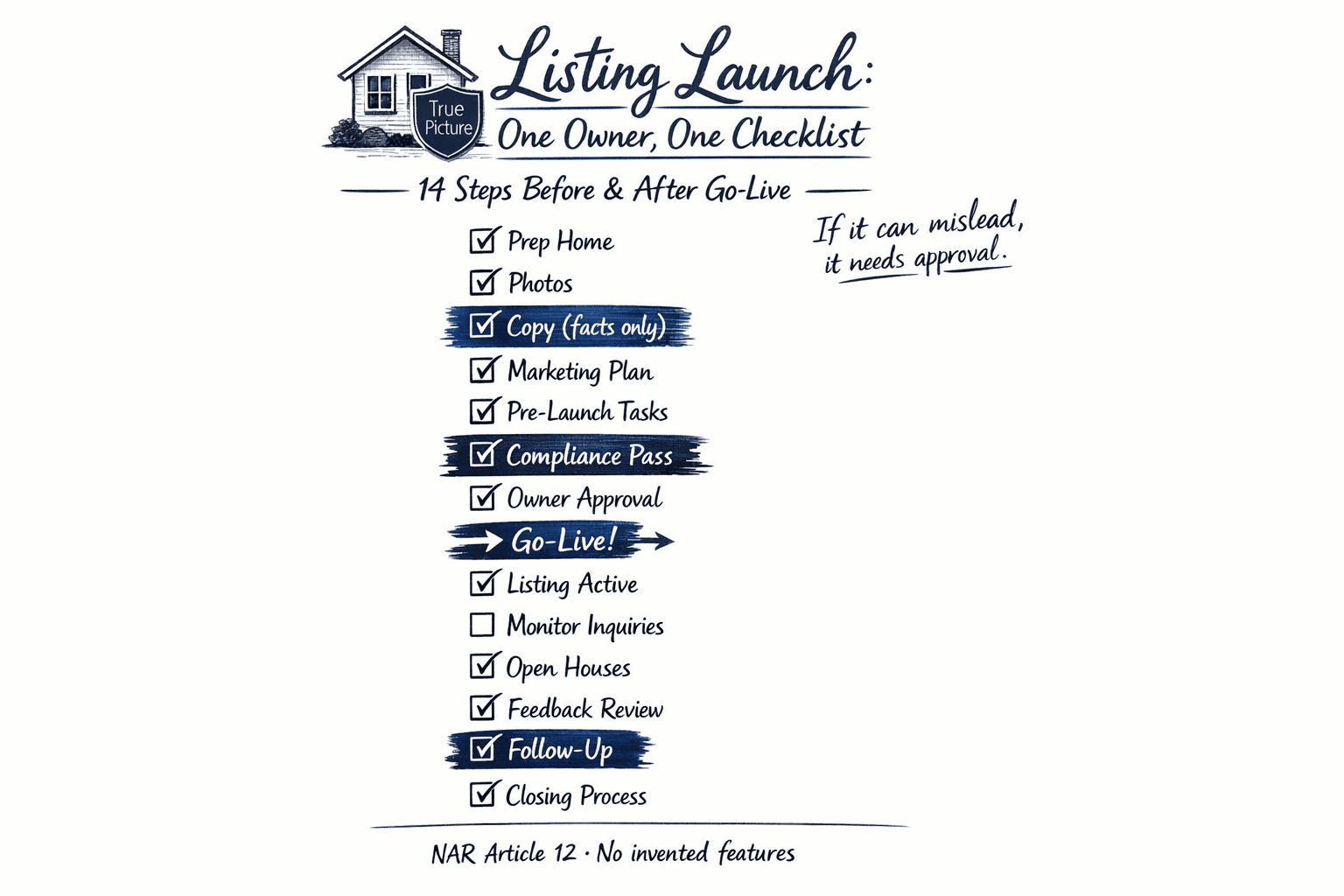
The listing launch checklist that prevents dropped handoffs
A listing requires photography, copy, portal, open house, and follow-up to land in the same week — owned by one person, on one checklist, with no step depending on someone remembering.
Read →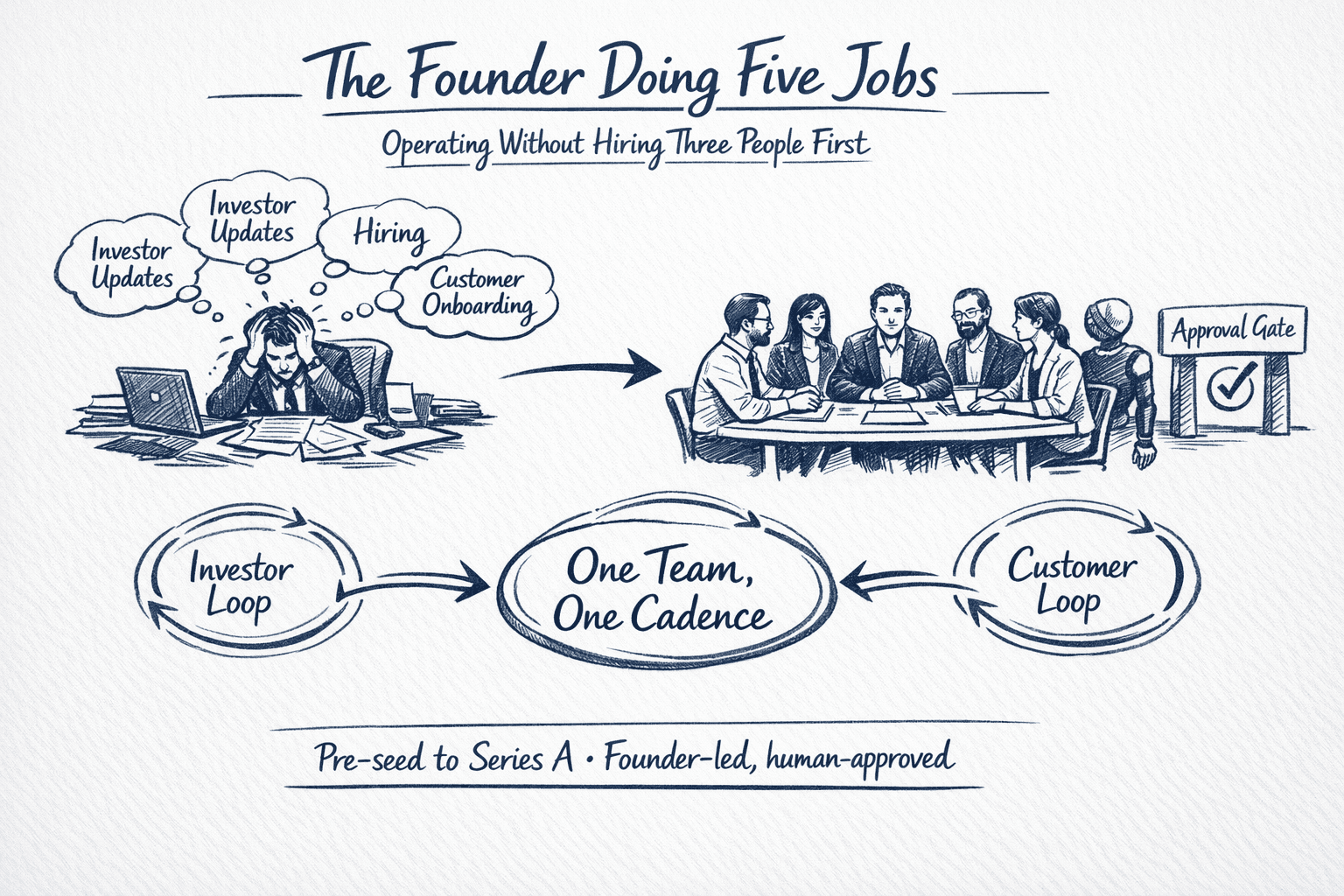
The founder doing five jobs: operating without hiring three people first
Pre-seed to Series A, the constraint is not ideas. It is follow-through across investor, hiring, and customer loops. How to install the operating rhythm without the headcount — and keep approval where it belongs.
Read →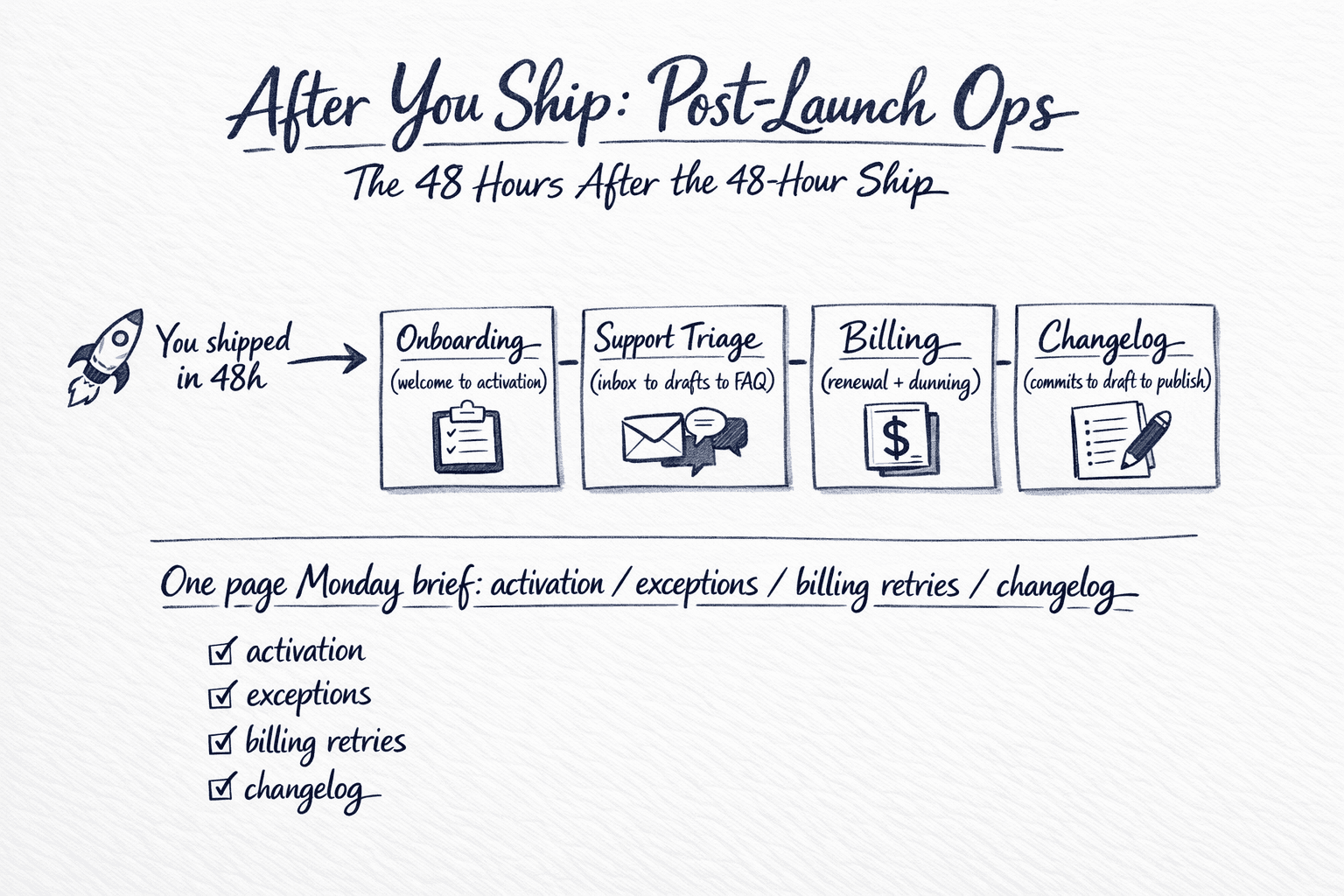
After you ship: post-launch operations for vibe coders and indie builders
You shipped in 48 hours with AI. Then onboarding, support, billing, and changelog quietly consumed the next 48. How to run what comes after — without hiring a team before you have revenue to justify it.
Read →Real estate
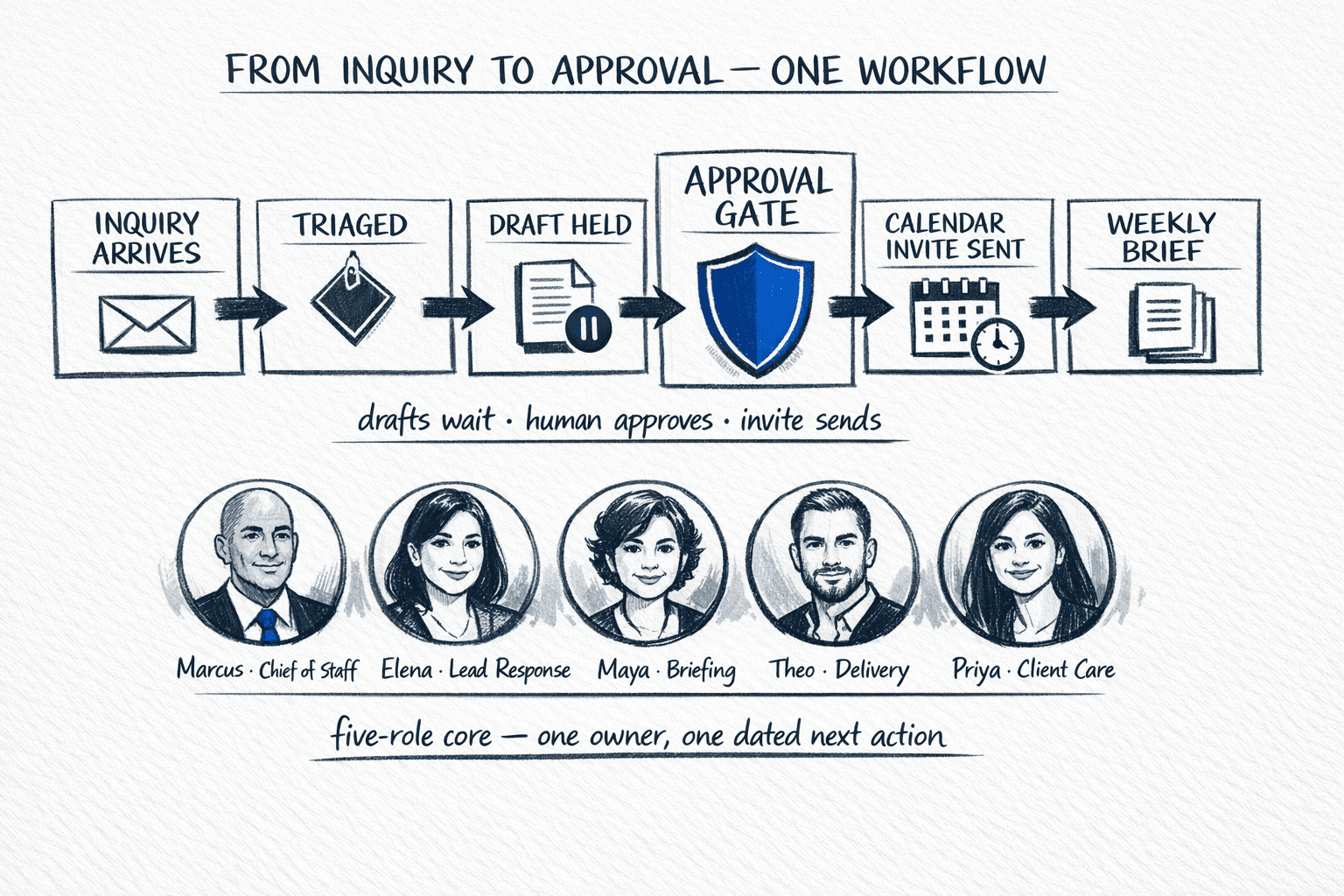
From inquiry to approval — one workflow, end-to-end
One anonymized inquiry, traced from portal arrival through the approval gate to a booked showing — every handoff, every draft-held-for-approval, and where the five-person core keeps the follow-through from depending on your memory.
Read →Inquiry to appointment: the 7-touch sequence that actually books showings
A fast first reply wins the conversation. A disciplined 72-hour sequence books the appointment. Here is the exact cadence — who drafts, who approves, and what happens when they say not yet — so inquiries stop dying after day one.
Read →The lead follow-through gap is the real conversion problem
Most teams do not have a lead-generation problem. They have a follow-through problem — leads arrive from five places, response depends on whoever is free, and nurture stops when the owner gets busy.
Read →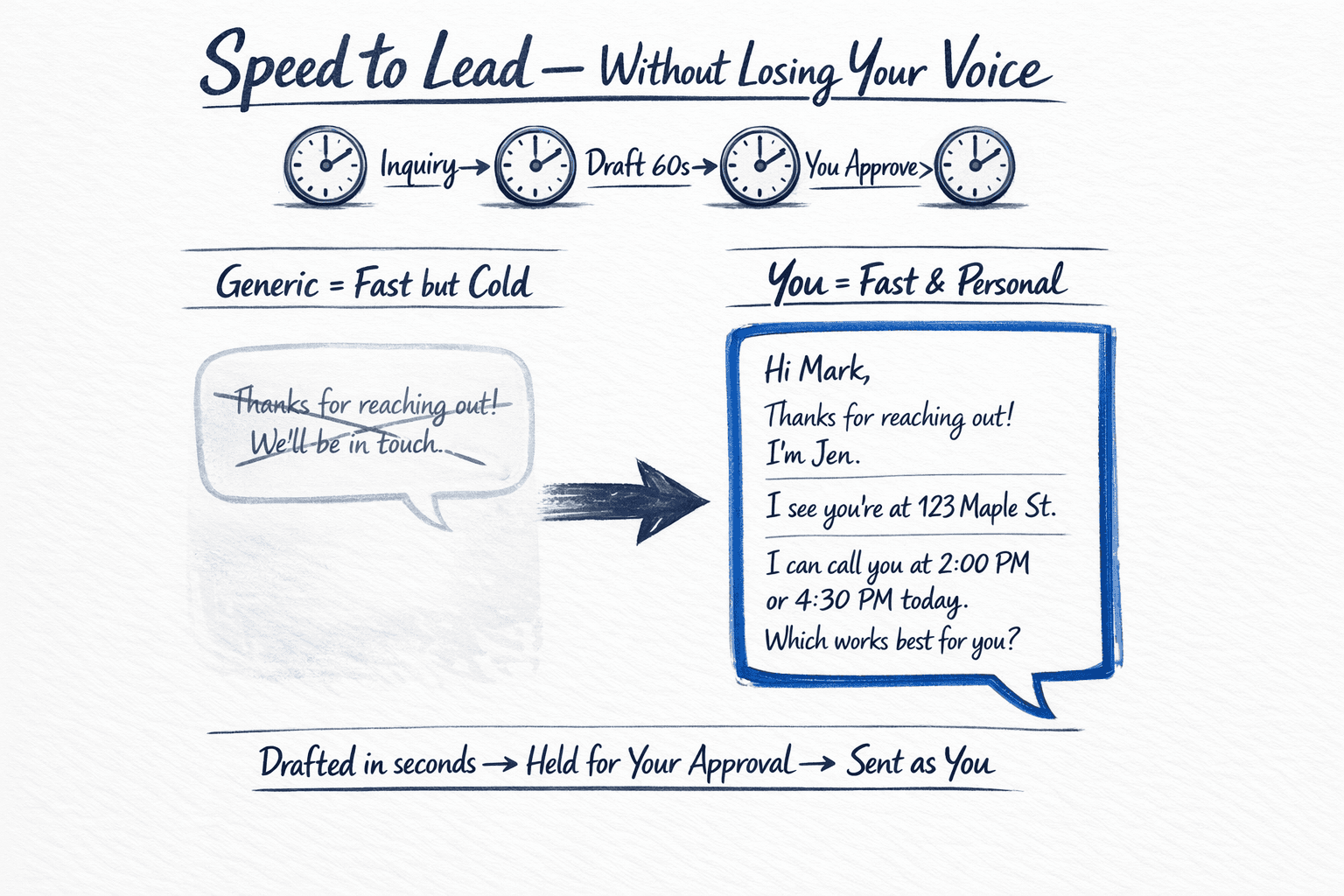
Speed to lead without losing your voice
Fast reply wins the first conversation. A reply that does not sound like you loses it. How to make response both immediate and approved — in your actual voice, with every send under your control.
Read →The listing launch checklist that prevents dropped handoffs
A listing requires photography, copy, portal, open house, and follow-up to land in the same week — owned by one person, on one checklist, with no step depending on someone remembering.
Read →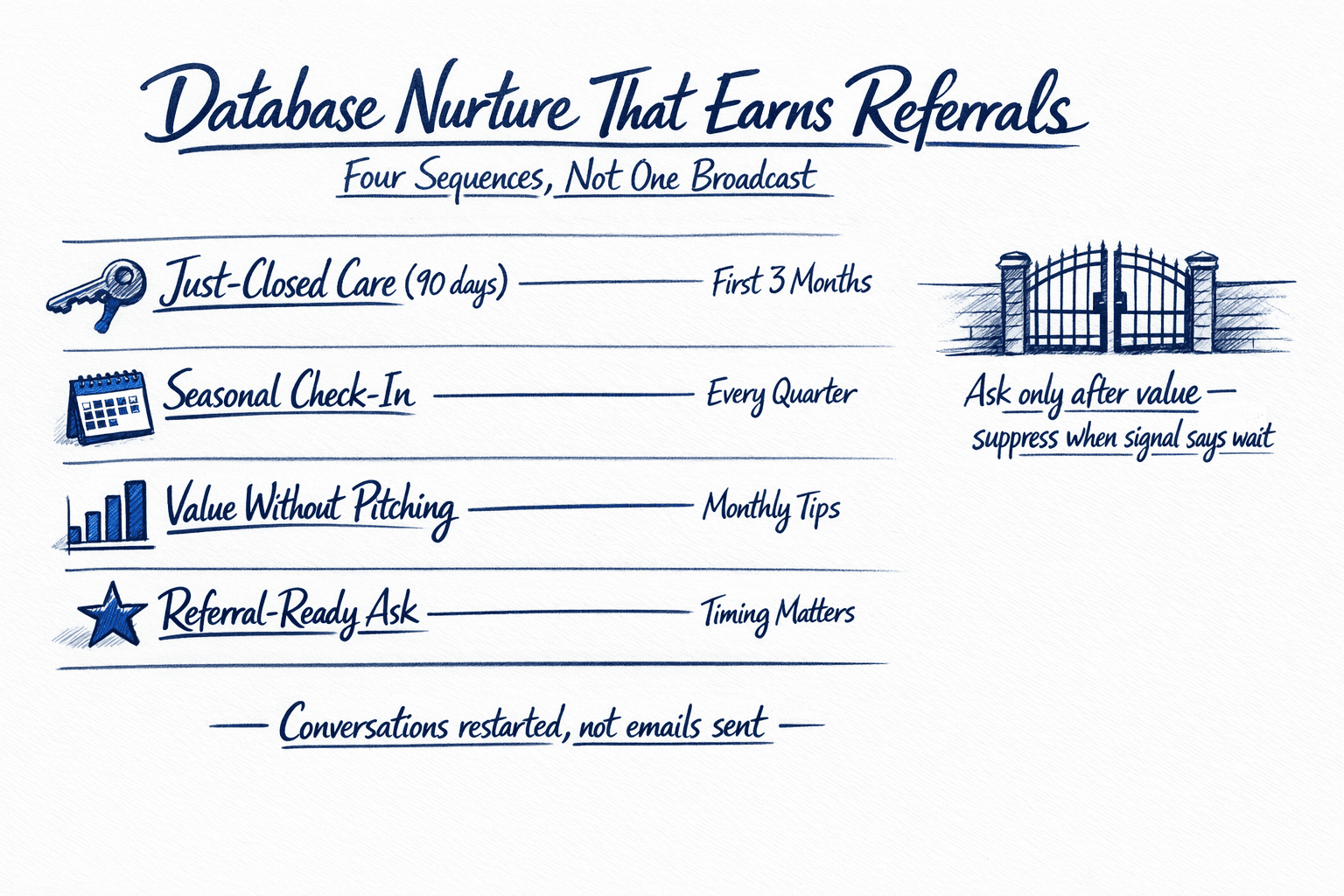
Database nurture that actually earns referrals
Past clients and sphere do not need another newsletter. They need a cadence that remembers them, reaches them for a reason, and makes asking for a referral a natural next step.
Read →Operations

Marcus is a send-delete person
The point of an AI chief of staff is not another place to assign work. It is being able to send Marcus the outcome, take it off your mind, and hear from him only when something genuinely needs you.
Read →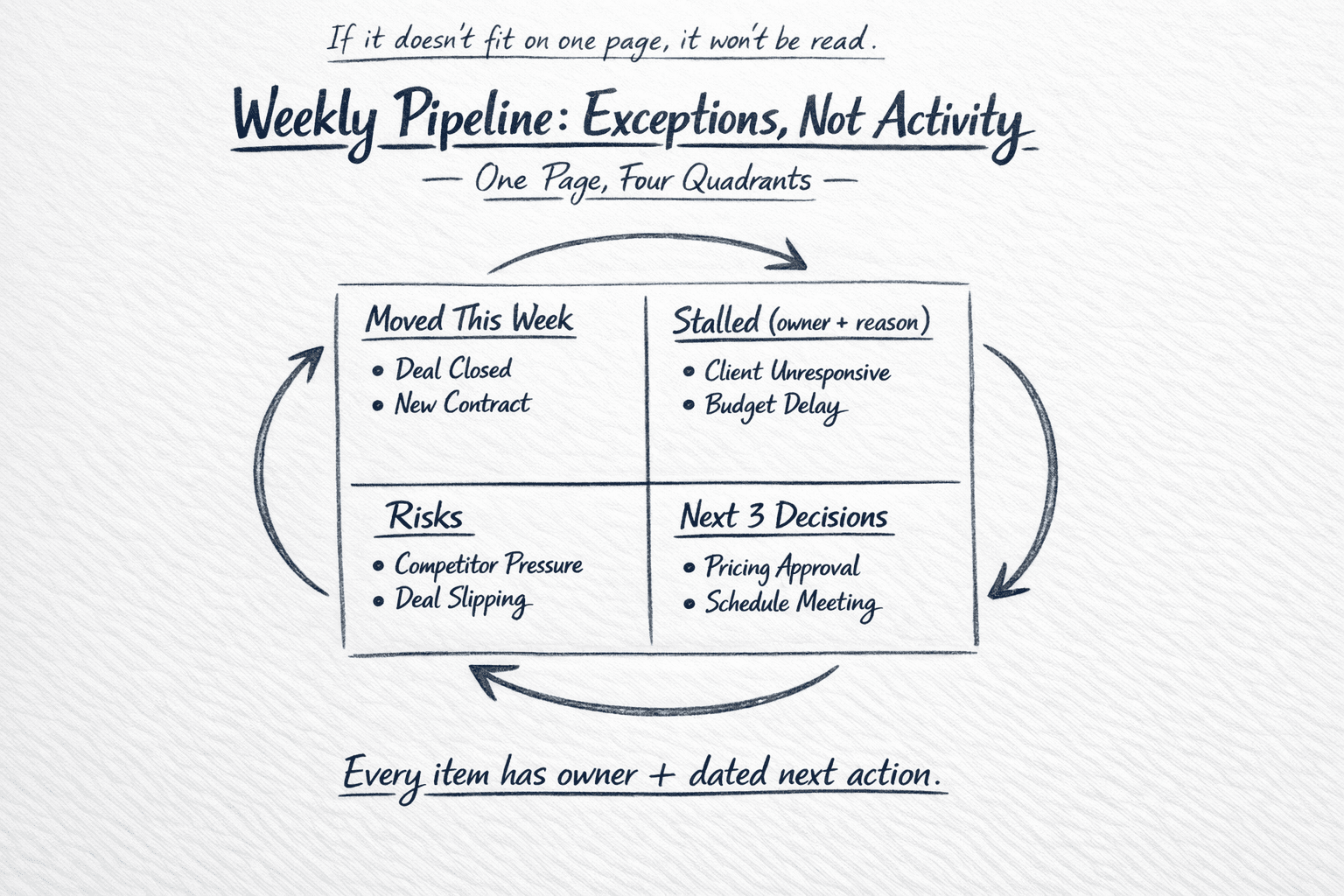
The weekly pipeline review that keeps deals from slipping through
Most pipeline meetings report activity. The one that protects revenue reports exceptions — what is blocked, who owes what, and which decision needs you this week.
Read →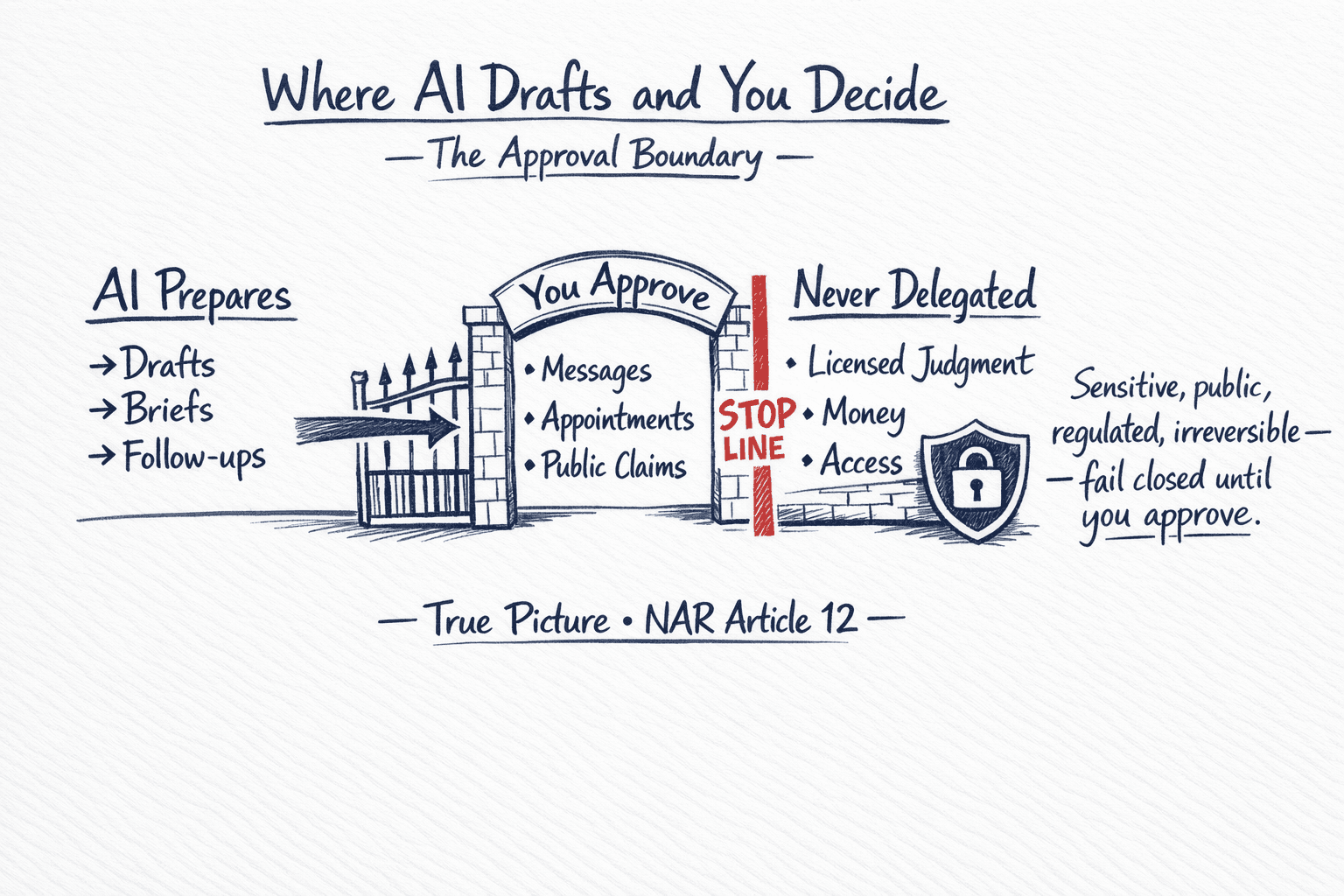
Where AI drafts and you decide: drawing the approval boundary
Every workflow starts with explicit boundaries. The team may draft, but you approve messages and public posts, appointments and commitments, and listing facts and regulated language. Some things are never delegated at all.
Read →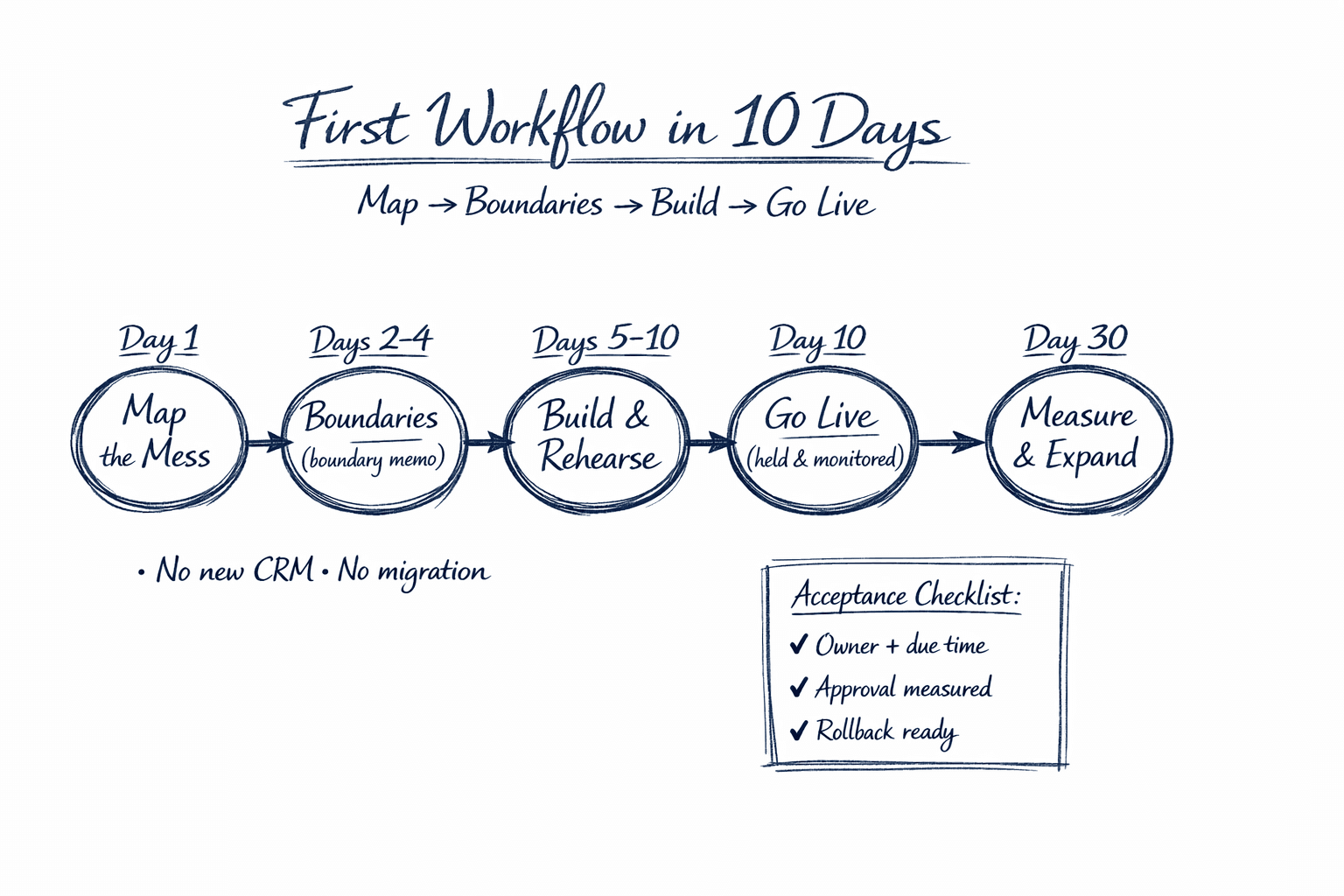
Live day one, tailored together: what actually ships first
No giant transformation project. Your pod goes live fast with pre-built workflows running day one. Your first session tailors the rest together — with human review, training, and a rollback plan before anything reaches a client.
Read →HIPAA-Compliant LLM: The 4 Ways to Run AI on Private Data (2026)
There is no HIPAA-compliant LLM. There are HIPAA-compliant LLM deployments — a model served through an endpoint covered by a BAA, or on hardware you control, wrapped in the access controls, audit logging, and retention guarantees the Security Rule expects.
Read →Buying guide
Startups
Builders
Talk to an operator
Thirty minutes. One workflow map. A straight answer.
Show us where work goes cold or falls between people — we will map the workflow that should own it first and where a human must stay in the loop.